
Dr. Jürgen Abrams is an entrepreneur, analyst, and founder of ABRAMS world trade wiki. As the initiator of the platform, he combines decades of industrial and market experience with the systematic analysis of global trade data. His focus is on the transparency of international trade flows, the identification of market participants, and data-driven support for strategic decisions in global trade.

About Dr. Jürgen Abrams
Dr. Jürgen Abrams has been dealing with international markets, supply chains, and the question of how complex trade flows can be structured, compared, and strategically utilized for over two decades. His work operates at the intersection of business, technology, and global trade.
The starting point of his career was industrial practice. In his early career, he gained experience in internationally active companies such as the SCHOELLER Group and PORSCHE and was intensively confronted with procurement, production processes, and cross-border supply relationships. It became clear that reliable market information in international trade is often fragmented, non-transparent, or difficult to access.
This realization led to the development of ABRAMS world trade wiki – a global trade information and research platform that consolidates international trade, customs, and shipment data into a unified structure. The goal of the platform is to create market transparency where decisions were previously based on assumptions, isolated sources, or incomplete data.
Dr. Jürgen Abrams pursues a clear aspiration: trade data should not only be available but also understandable, comparable, and operationally usable.
Scientific Background & Methodology
The conceptual basis of ABRAMS world trade wiki is formed by Dr. Abrams’ scientific work on vertical electronic marketplaces, in which he addressed the structuring of complex markets and digital trading environments early on. This research experience flows directly into the platform's systematics, data modeling, and user guidance.
Dr. Jürgen Abrams stands for global trade based on transparency, data quality, and analytical depth. He sees ABRAMS world trade wiki as a tool to better understand markets, make more informed decisions, and reduce uncertainties in international trade.
Professional Experience
Education
Publications
 Automating the Deal: How Disruptive Tools Are Transforming M&A Forever
Editor: Dr. Karl Popp
Co-Author: Dr. Juergen Abrams
Publication Date: March 12, 2025
ISBN-10: 3769378776
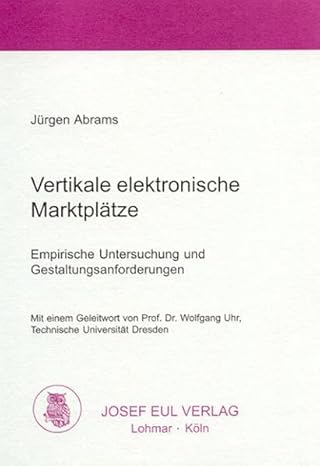 Vertikale elektronische Marktplätze. Empirische Untersuchung und Gestaltungsanforderungen.
Author: Jürgen Abrams
Publisher: JOSEF EUL VERLAG
Publication Date: October 1, 2002
ISBN-10: 3899360141
Awards
Focus: Award for Business Intelligence Solutions.
→ Criteria for the award: The focus was on the degree of innovation, the practical applicability of the tools (Maturity), and the direct business value.
Published on: February 9, 2026 • Last updated: July 8, 2026


